Winter Expeditions
Winter Expedition Guide: Driving and Living at −25°C
Winter does not make the mountains harder to drive. It makes them slower, shorter and far less forgiving of a missing piece of kit.
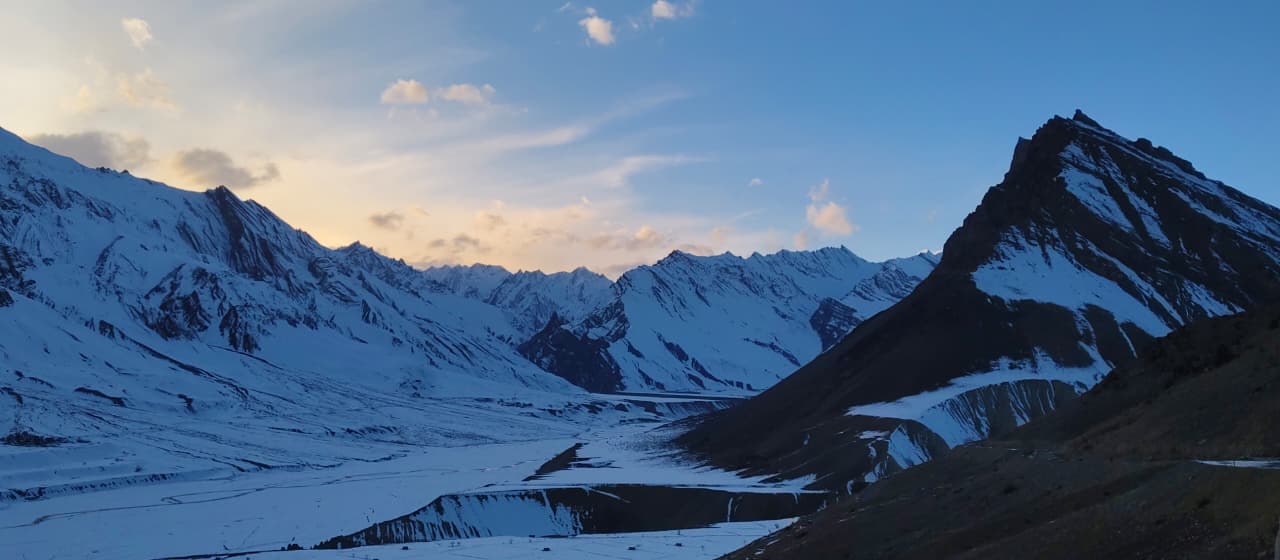
A winter expedition compresses everything. Daylight is short, roads are single-lane and cleared, and the margin between comfortable and miserable is one forgotten layer. What you gain is a landscape almost nobody sees.
Driving on snow and ice
- Everything gentle: steering, throttle, braking. Sudden inputs are what break traction.
- Use engine braking on descents rather than riding the brake pedal.
- Black ice lives in shade — under cliffs, on north faces and after 3pm.
- Double your following distance and then double it again in convoy.
- Chains go on before you need them, not after you are stuck.
Cold and the vehicle
Diesel starts to gel below about −15°C. Winterised fuel, an additive and parking somewhere sheltered overnight matter more than any tyre choice. Batteries lose a third of their capacity in deep cold, so a jump pack is not optional. Keep half a tank minimum to reduce condensation.
Living at −25°C
Winter homestays are insulated rooms with a bukhari in the common area, thick quilts and hot food. Pipes freeze, so water arrives in buckets and washing is a strategic decision. It is comfortable in a village way, not a hotel way — and the evenings around the stove are usually what people remember.
In winter, the itinerary is a suggestion and the weather is the schedule.
Planning for closures
- 01Add one buffer day to any winter itinerary. One is usually enough; zero never is.
- 02Never drive after dark — refreeze turns slush into a sheet.
- 03Accept short days: 100–140km is a full winter day in the mountains.
- 04Keep a warm layer, water and snacks inside the cabin, not in the roof box.
Cold and altitude together
Cold air is dry air, and dry air dehydrates you faster than you notice at 3,800m. Drink more than feels reasonable, skip alcohol for the first three nights, and read the high altitude safety guide before you go.
Downloads
Frequently asked
- How cold does it get on a winter Himalayan expedition?
- Daytime temperatures sit between −5°C and 0°C and nights fall to −20°C or −25°C in villages above 4,000m such as Langza and Komic.
- Do I need snow chains?
- Yes, carried and correctly sized to your tyres. Cleared roads are usually drivable without them, but a fresh snowfall or an icy climb changes that within minutes.
- What happens if the road closes due to snowfall?
- Clearing usually takes 24 to 48 hours. Every winter itinerary we run carries a buffer day so a closure costs you a day in a village rather than your flight home.
- Is there heating in winter homestays?
- Common areas are heated by a bukhari wood stove and rooms are insulated with thick quilts. Rooms themselves are usually unheated overnight, which is why the sleeping kit list matters.
Ride with us
See the valley frozen
Seven days into snow-locked Spiti — frozen waterfalls, empty roads and homestays run on bukharis.
See the Winter Spiti ExpeditionWritten by
Hello Himalayas Expedition Desk
Route planning & operations, Rohru
Our route planners have run these roads every season since 2015, from Rohru into Spiti, Zanskar and eastern Ladakh. Everything here comes out of the logbook.