Routes
Driving to Frozen Spiti: What a Winter Road Trip Really Involves
Winter Spiti is not a colder version of the summer circuit. Shorter driving days, one open road, and villages where the only heat comes from a bukhari — here is how the trip actually runs.
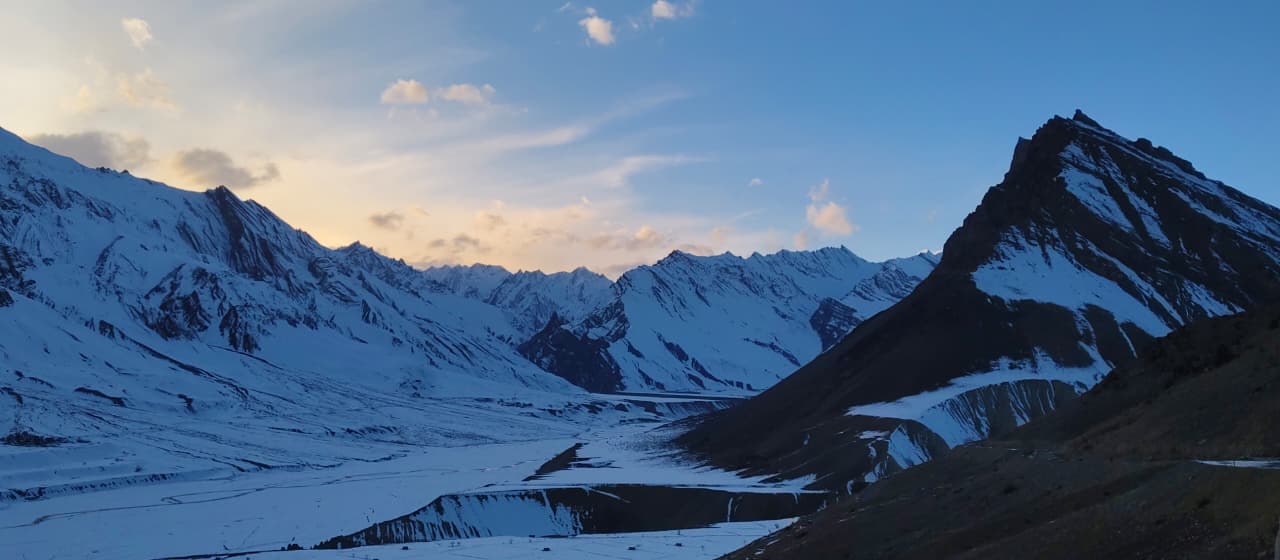
Between December and March there is exactly one way into Spiti: the Kinnaur road along the Sutlej and then the Spiti river. Kunzum La is buried. That single-road reality shapes every decision on a winter trip — pace, vehicle choice, fuel planning and how much slack you leave in the itinerary.
The route, and why it is slow
Shimla to Kaza is around 420km. In summer that is two comfortable days. In winter it is three, because black ice forms in the gorge sections after sunset, the road narrows to a single cleared lane in places, and you simply do not drive after dark. Expect 100–140km on a typical winter day.
- 01Shimla to Sangla or Chitkul — gentle altitude gain, first snow sections.
- 02Sangla to Nako or Tabo — the Kinnaur gorge, the most exposed stretch of the drive.
- 03Tabo to Kaza — the valley opens out and the cold arrives properly.
- 04Kaza-based days — Langza, Komic, Hikkim, Key and Kibber as weather allows.
Vehicle preparation
- Diesel gels in extreme cold — winterised fuel and an overnight-warm parking spot matter more than tyres.
- All-terrain tyres with real tread depth; snow chains carried, not hoped for.
- A second battery or jump pack. Cold-start failures at −20°C are the most common breakdown.
- Recovery kit: shovel, tow strap, traction boards. Self-recovery is normal, not dramatic.
- Full jerry can. Fuel between Reckong Peo and Kaza is unreliable in winter.
In winter the valley sets the schedule. The only real skill is being willing to stop early.
Where you sleep
Hotels above Reckong Peo mostly shut for the season. What stays open are family homestays with insulated rooms, a bukhari in the common area, hot food and thick quilts. Running water is often limited to buckets — pipes freeze. It is genuinely comfortable, but it is village comfort, not hotel comfort.
Health and cold management
Cold amplifies altitude. Kaza is 3,800m and Komic sits above 4,500m; combine that with dry air and short daylight and dehydration creeps up fast. Drink more than feels necessary, avoid alcohol for the first three nights, and keep a spare warm layer inside the vehicle rather than in the roof box.
Building in weather buffer
Plan for one lost day. Heavy snowfall can close the Kinnaur road for 24–48 hours while it is cleared. A nine-day itinerary with a buffer day comes home on time; a six-day sprint does not. Our Winter Spiti Expedition is built around exactly this margin.
Frequently asked
- Can you drive to Spiti in winter in a normal car?
- Technically the Kinnaur road is cleared for two-wheel-drive traffic on good days, but sudden snow, ice on shaded corners and no recovery support make a 4x4 with all-terrain tyres the sensible minimum for December to March.
- How many days does a winter Spiti trip take?
- Nine days from Shimla and back is the realistic minimum: three days up, three days based at Kaza, two days down, and one weather buffer day.
- Is there mobile network in Spiti in winter?
- BSNL and Jio work in Kaza and intermittently in Tabo and Nako. Between villages assume no signal at all, and expect power cuts that take the network down with them.
- What temperature should I pack for?
- Pack for −25°C at night and around −5°C during the day. Layered insulation, an expedition-grade jacket, insulated boots and a warm sleeping liner make the difference between enjoying the valley and enduring it.
Written by
Hello Himalayas Expedition Desk
Route planning & operations, Rohru
The crew that scouts, drives and runs every Hello Himalayas convoy across Spiti, Ladakh and Zanskar. Everything here comes from seasons spent on the road, not from a desk.