Routes
Zanskar by Road: The Valley Behind the Shinku La
Zanskar is the least-forgiving and most rewarding valley we run. One tarred approach, one rough one, and a whole lot of gorge in between.
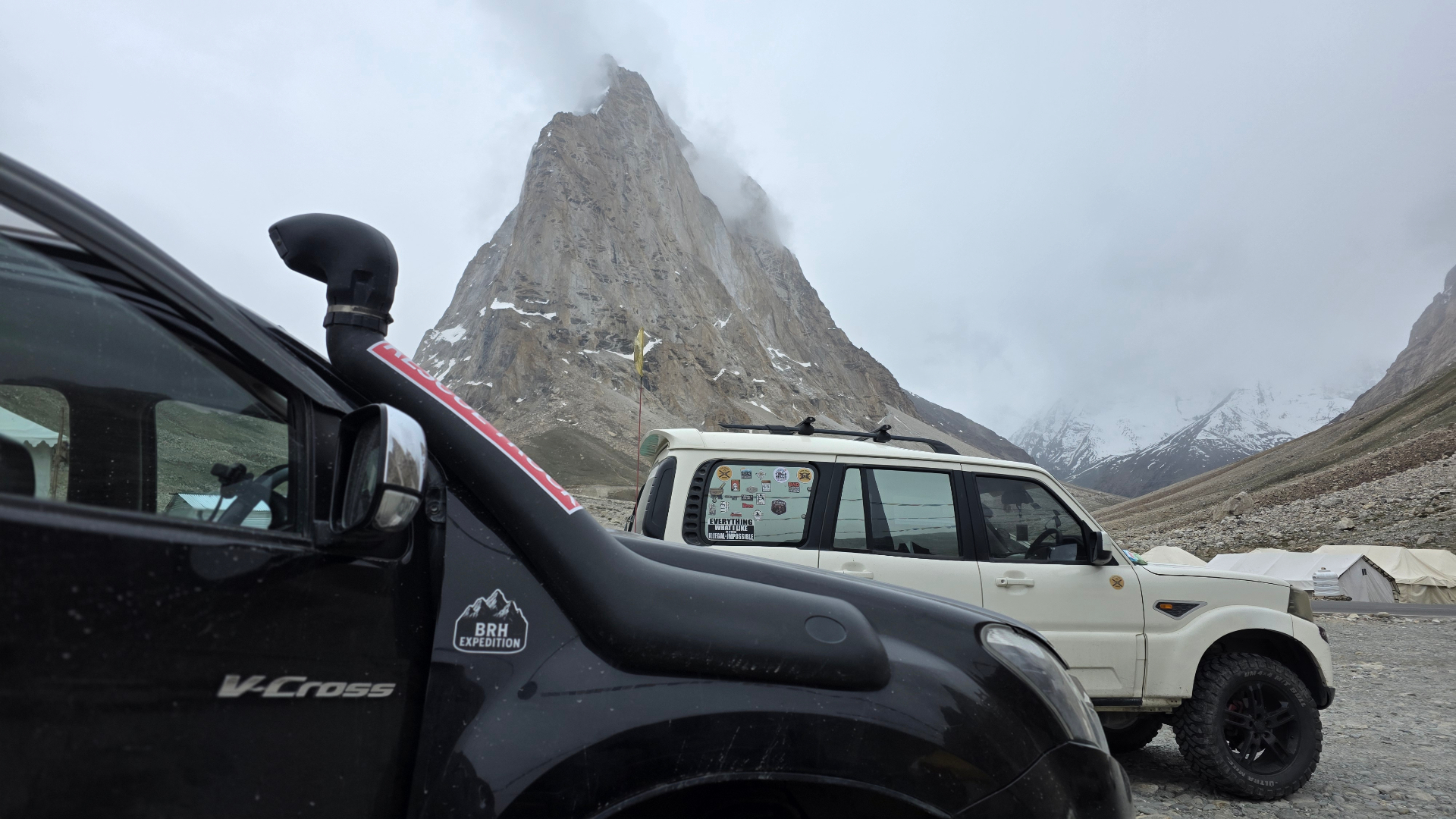
Zanskar sits between the Great Himalayan range and the Zanskar range, and until recently reaching it meant a long detour through Kargil. The Shinku La road from Darcha changed that — but changed does not mean easy.
Two ways in
Darcha to Padum over Shinku La
The direct approach at 5,090m. Sections are now tarred, others are broken shale and water crossings fed by afternoon melt. Cross the streams in the morning when flow is lowest. This is the route our Zanskar and Trans Himalayan expeditions use.
Kargil to Padum
The historic road along the Suru valley past Rangdum. Longer, gentler on the vehicle, and spectacular in a completely different way — glacier faces on one side and open pasture on the other. Useful as an exit if the Shinku La weather turns.
What the driving is actually like
- Long unsurfaced sections with loose shale — tyre sidewalls take the punishment, not the tread.
- Glacial river crossings that deepen through the afternoon.
- Exposed gorge ledges with no barrier and limited passing places.
- Almost no traffic, which also means almost no help.
In Zanskar the road is not a route between places. It is the place.
Fuel, food and connectivity
Padum has fuel, but treat it as unreliable and carry a full jerry can from Darcha or Kargil. Food is simple and good — Zanskari homestays and small guesthouses. Mobile coverage exists in Padum and effectively nowhere else, so leave a route plan with someone at home.
What to actually see
- Phugtal Gompa, built into a cliff cave and reached on foot.
- Karsha and Stongdey monasteries above the Padum plain.
- The Zanskar–Doda confluence at Zangla.
- The gorge stretch between Padum and Nimmu, where the river cuts through vertical rock.
When to go
Mid-June to late September. Shinku La opens with the snow melt and closes with the first serious autumn snowfall. Outside that window Zanskar is cut off entirely — which is how the frozen Chadar route on the river became a thing in the first place.
Frequently asked
- Is the Darcha to Padum road complete?
- Large sections are tarred and the rest is graded gravel and shale with seasonal water crossings. It is drivable in a 4x4 through summer but is not a highway, and conditions change year to year.
- How many days do you need for Zanskar?
- Six days is enough for a focused Padum-centred trip including Phugtal and Karsha. Combining Zanskar with Ladakh needs ten to eleven days.
- Are there ATMs and fuel in Padum?
- There is fuel and at least one bank in Padum, but neither is dependable. Carry cash for the whole trip and a full jerry can of fuel.
- Is Zanskar suitable for first-time high-altitude travellers?
- Yes, with a properly staged itinerary. The altitude is manageable — it is the remoteness and road surface that demand experienced drivers and convoy support.
Written by
Hello Himalayas Expedition Desk
Route planning & operations, Rohru
The crew that scouts, drives and runs every Hello Himalayas convoy across Spiti, Ladakh and Zanskar. Everything here comes from seasons spent on the road, not from a desk.